The first time someone in their mid‑20s asks about preventative botox, there is often a familiar mix of curiosity and guilt in their voice. They feel “too young,” but they are also noticing the first signs of fine lines and wondering if starting early will protect their skin or commit them to a lifetime of injections.
As someone who has watched patients age over decades, not just months, I can tell you this: the answer is rarely a simple yes or no. Preventative botox can be smart, but only for the right person, in the right areas, at the right time, and with the right expectations.
This article walks through how I actually think about younger skin and early botox in practice, far beyond “You should start at 25” or “Wait until you have deep wrinkles.”
What preventative botox really is (and what it is not)
Botox is a purified form of botulinum toxin type A. In tiny, carefully placed doses, it temporarily relaxes specific muscles by blocking the nerve signal that tells those muscles to contract. When we use it for cosmetic reasons, we are mostly targeting dynamic wrinkles, which are the lines created by expression: squinting, frowning, lifting the brows, scrunching the nose.
Common examples of dynamic lines include:
- botox for forehead wrinkles across the frontalis muscle botox for crow’s feet around the eyes botox for frown lines or botox for glabellar lines between the brows
With age and repeated motion, many dynamic wrinkles start to etch into the skin as static wrinkles that remain even when the face is at rest. Preventative botox is simply the strategic use of lower doses, earlier in life, to limit repetitive creasing and slow the transition from dynamic to static wrinkles.
It is not a universal shield against aging, and it does not stop time. It also does not replace the basics: sun protection, consistent skincare, nutrition, sleep, and stress management. In real life, it works best as one tool in a broader long term anti aging strategy, not the only strategy.
When do fine lines justify treatment?
I am less interested in the number on your birthday cake and more interested in what I see and how your face moves. I regularly see three different “25‑year‑olds,” and they age very differently.
One has a baby‑smooth forehead but squints aggressively, with early crow’s feet and strain around the nose. Another works at a computer, frowns unconsciously, and is already showing vertical “11” glabellar lines. The third grew up in strong sun without daily SPF and has a scattering of fine lines and wrinkles across the entire upper face.
Chronological age is a poor predictor. I pay more attention to:
" width="560" height="315" style="border: none;" allowfullscreen="" >
- The depth and pattern of existing dynamic wrinkles when you animate the face Whether fine lines are starting to remain at rest (the start of static wrinkles) Your family aging pattern, especially around the eyes and forehead Lifestyle, such as tanning, smoking, or occupations that demand intense facial expression
If you are in your mid‑20s to mid‑30s, have strong movement in a specific area, and are already seeing faint lines stay after expression, targeted preventative botox can make sense. If your skin is still perfectly smooth at rest and you are simply anxious because of social media, waiting and focusing on skincare and sun avoidance is often the better move.
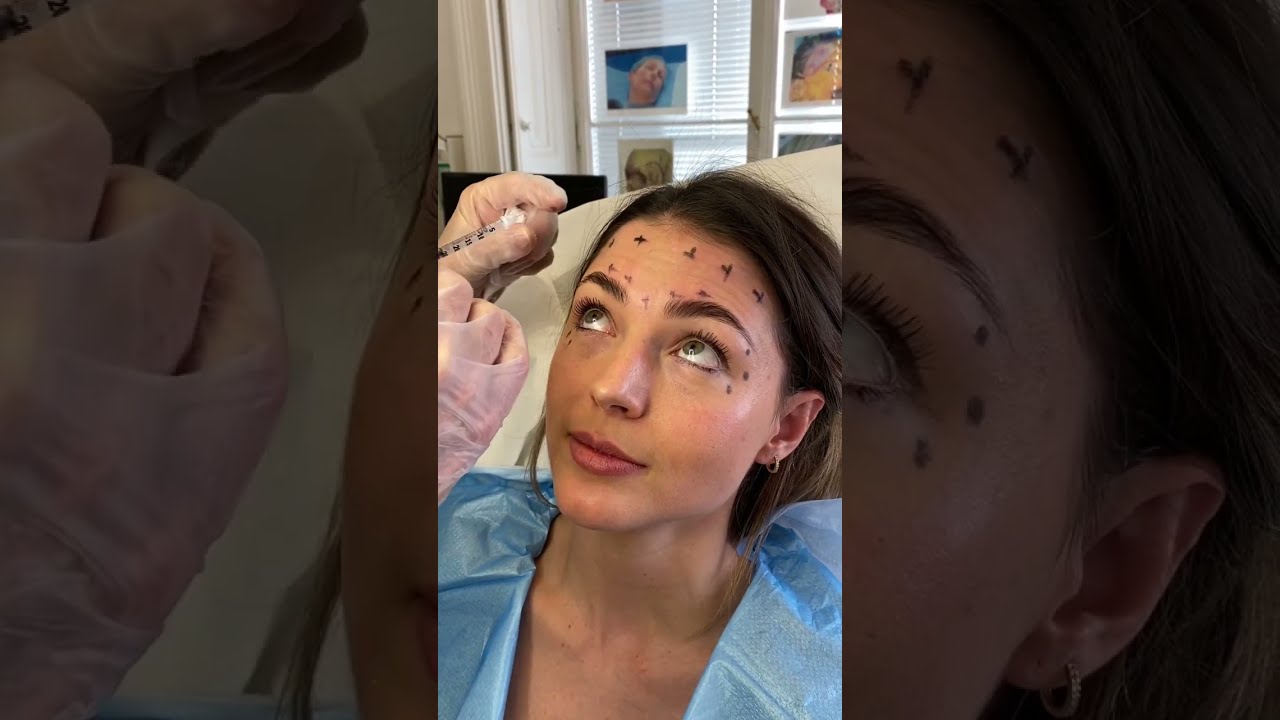
Common treatment areas in younger patients
Early botox for younger skin is almost always lighter and more focused. The goal is subtle botox results that soften motion but do not blunt expression.
Forehead and frown lines
Preventative botox for forehead wrinkles and botox for frown lines between the brows remain the most common first treatments. Many young patients have a habit of lifting their eyebrows sharply when talking or concentrating. Over time, this can cause horizontal lines across the forehead and vertical glabellar lines that can make someone look tired or tense even when they feel fine.
I prefer a conservative approach for the first time botox session: fewer units, more spacing, and very careful observation of your natural brow position. Heavy dosing in a younger forehead risks a flat or heavy brow, and in those with hooded eyes, poorly placed botox can make the lids look heavier. That is where experience with botox for eyebrow lift or botox for brow lift becomes important: tiny adjustments in injection points can lift the tail of the brow a few millimeters and give the eyes a less fatigued look, instead of creating a droopy effect.
Crow’s feet and eye area
Botox for crow’s feet works beautifully on patients who have strong lateral eye crinkling from smiling or squinting. In a younger face, I often treat this area more gently, because a small amount of creasing when you smile is natural and attractive. The aim is not to freeze the smile, but to prevent those lines from carving deeper, especially in patients who have a strong squint or a family pattern of deep eye wrinkles.
The inner eye region needs extra caution. Botox for under eye wrinkles is possible, but the skin is thin and the risk of puffiness or a strange “flat” look is higher with aggressive treatment. A few carefully placed units, combined with skincare and perhaps other modalities like microneedling or laser treatments later on, can support eye rejuvenation without overdoing it.
Nose, mouth, and chin nuances
Younger patients are often more interested in subtle refinements in the lower face than in heavy upper face work.
A few examples from day‑to‑day practice:
- Botox for bunny lines, those diagonal wrinkles on the sides of the nose when you scrunch it Botox for a lip flip, where very small doses at the upper lip border slightly roll out the lip, showing more pink without adding volume Botox for gummy smile, which relaxes the upper lip elevator muscles so less gum shows during a full smile Botox for chin dimpling or a dimpled chin, which smooths the “pebbled” appearance caused by an overactive mentalis muscle
These areas use micro doses, often in the range of 2 to 8 units, and are good examples of what people mean by baby botox treatment. Movement is softened rather than erased. The effect is often more about polish and balance than about aging.
Jawline, masseters, and facial slimming
Another huge trend in younger patients is botox for jaw slimming or botox for masseter reduction. In those with bulky masseter muscles from chewing, clenching, or genetics, carefully placed botox can slim the lower face and create more facial contouring, especially when seen in profile.
Here, the motivation is often twofold. Some seek a more tapered, V‑shaped face for aesthetic reasons. Others suffer from botox for TMJ pain indications, such as jaw tension, headaches, or botox for teeth grinding at night. In these cases, the treatment can be both therapeutic and cosmetic.
Botox for facial slimming in the jawline is often a bigger commitment. It uses higher total units than a little baby botox in the forehead, and results evolve slowly over months as muscle bulk shrinks. It is a great example of why your long term maintenance plan and budget need realistic discussion before your first syringe ever touches your skin.
Is it too early? Questions I ask younger patients
Age alone is not the right filter. The better questions are more practical and personal.
Here is a short checklist I mentally run through during a botox consultation process with someone under 30:
Are there visible dynamic wrinkles, and do any lines remain at rest after expression stops? Do you have habits (squinting, frowning, grinding) that drive repetitive muscle use in specific areas? What is your tolerance for maintenance, both financially and in terms of appointments every 3 to 6 months? Are your expectations focused on softening or preventing, rather than erasing every line? Have we optimized non injectable basics first, like SPF, skincare, and lifestyle factors?If you cannot answer yes to most of those, you may be better off waiting, or starting with fewer areas and very conservative dosing. It is always easier to add during a touch up visit than to “undo” an over‑treated face.
Units, dosage, and how long results last
Younger patients often arrive having heard one friend “gets 20 units” and another “needs 50.” Without context, those numbers are meaningless.
Botox units explained in practical terms:
A forehead on a petite woman with a low hairline may need 6 to 10 units for a softening effect. A tall man with a broad forehead and strong muscles might need 16 to 24 units for similar visible change. The same is true for botox for glabellar lines or crow’s feet: anatomy and muscle strength, not just age, drive the botox dosage guide.
Baby botox treatment and micro botox facial techniques use lower quantities spread botox in New York, NY across more points to gently reduce movement or, in the case of micro botox, even target the superficial layers to help with botox for oily skin or botox for pore reduction. These approaches can be attractive for botox injections for beginners, as they err on the side of subtlety.
Most cosmetic botox results last about 3 to 4 months. In some areas or in younger patients with fast metabolism, you may start to see botox wearing off signs as early as 8 to 10 weeks. With repeated sessions, some people find the effect lasts slightly longer as muscles weaken gently over time.
As for how often you should get botox, I typically suggest:
- 3 to 4 months between early treatments for active areas like frown lines or crow’s feet 4 to 6 months once we know how you respond and if your goal is mild prevention rather than heavy correction
Your botox maintenance plan should be flexible. Life events, budget changes, and evolving aesthetic goals all matter. You are not signing a binding contract for quarterly injections forever, despite what social media may imply.
Cost, safety, and realistic expectations
Younger patients are often cost sensitive, and understandably so. Botox cost per unit varies by region and clinic experience, but you will generally see figures in the range of 10 to 20 dollars per unit in many urban practices. A small preventative treatment for forehead and glabella might use 20 to 30 units total. A full upper face package, including botox for forehead wrinkles, glabellar lines, and crow’s feet, may use 30 to 50 units.
Cheaper offers are not automatically unsafe, but you should ask what product is actually being used, how many units you are receiving, and whether the injector has real training in botox facial mapping, botox precision dosing, and botox muscle targeting. Cutting corners here can lead to poor results that are far more expensive in regret than in dollars.
Regarding safety, is botox safe is a fair question, especially for a 25‑year‑old thinking decades ahead. When administered correctly, botox has a long safety record in both cosmetic and medical settings, including high dose treatments for botox for chronic migraines, botox for sweating and hyperhidrosis, and even pediatric conditions. However, it is still a medication with potential side effects.
Common botox side effects are usually mild and temporary: slight bruising, tenderness, a transient headache, or a feeling of heaviness in the treated area. Less common risks include asymmetry, eyebrow or eyelid droop, and, rarely, more systemic effects if dosing is inappropriate or product spreads beyond the target muscles. These are reasons to treat preventative botox with the same seriousness as any medical intervention, not like getting a manicure.
The real botox risks and benefits conversation cannot be copy pasted from a brochure. It should be specific to your anatomy, your health history, and your goals, and it should include alternatives like botox vs dysport vs xeomin, botox vs fillers, botox vs microneedling, or botox vs laser treatments when appropriate.
How botox fits with other treatments and skincare
Preventative botox is most effective when it is part of a coordinated plan rather than a knee‑jerk response to a single new line.
Younger skin often responds beautifully to a combination of:
- Daily sunscreen and a skincare routine that respects your skin type, whether that is botox for sensitive skin concerns or managing acne Periodic treatments that stimulate collagen, like microneedling or certain laser resurfacing protocols Targeted injectables, such as subtle botox for expression lines and, later, dermal fillers for volume loss when appropriate
For example, someone in their late 20s might start with baby botox across the frown lines and crow’s feet, while using topical retinoids for texture and tone. A few years later, if under eye hollows or early nasolabial folds start to form, we might discuss botox with dermal fillers, or botox with chemical peel or with laser resurfacing sessions spaced throughout the year.
Importantly, botox for smile lines, botox for nasolabial folds, and botox for marionette lines is less common, because these areas are driven more by volume loss and skin elasticity than by muscle overactivity. Fillers, biostimulators, and energy‑based devices usually play a bigger role there, particularly as you move into your late 30s and beyond.
Non cosmetic uses that often matter to younger patients
Preventative botox conversations frequently overlap with medical concerns. A classic example is the student in their 20s who grinds their teeth and wakes with jaw pain and tension headaches. Treating the masseter muscles with botox for TMJ pain and botox for teeth grinding can prevent long‑term dental wear and reduce discomfort, while also giving a softer jawline.
Similarly, botox for sweating or botox for hyperhidrosis can be life changing for someone dealing with excessive sweating in the underarms, hands, feet, or scalp. Botox for underarm sweating, hand sweating, foot sweating, or scalp sweating typically lasts longer than cosmetic botox, often 4 to 6 months, sometimes more, and can reduce social anxiety and clothing limitations.
Migraines are another key area. Botox for migraines and botox for chronic migraines target multiple muscle groups across the forehead, temples, and neck. While this is primarily medical, younger patients with frequent headaches sometimes notice a secondary cosmetic bonus: fewer forehead lines and less tension in the brow and trapezius muscles. The recent trend of botox for trapezius slimming or “trap tox” for shoulder tension and a longer looking neck borrows from this, though it should always be done thoughtfully, with function in mind.
What a first time botox session is really like
For many young patients, the biggest fear is not the needle itself, but the unknown. They have seen dramatic botox before and after results online and worry they will not recognize their own face.
Here is how a typical first visit unfolds in a well run clinic:
You start with a detailed consultation. We talk through your concerns, examine your face at rest and in motion, and sometimes show you in a mirror exactly where muscles are pulling. I may mark out injection points lightly and explain what each area does. This is the botox treatment planning and botox consultation process that sets the stage.
Then we discuss product choice, such as botox vs dysport vs xeomin. All are neuromodulators with similar mechanisms, but they differ slightly in onset and diffusion. For a precise area like a gummy smile or lip flip, some injectors prefer one product over another due to experience and control. The important part is that you understand the rationale.
During the injections, the discomfort is brief. Most people describe it as a series of pinches more than true pain. The actual treatment of a few facial areas usually takes under 10 minutes.
Aftercare, recovery, and what to expect over time
Botox aftercare tips are fairly simple, but they do matter, especially if you want to avoid unnecessary bruising or diffusion.
Typical guidance in my practice includes:
Avoid strenuous exercise, saunas, and hot yoga for about 24 hours. Do not rub or massage treated areas the same day. Stay upright for several hours after treatment, avoiding lying flat immediately. Skip facials, microdermabrasion, or aggressive facial massages for a few days. Use gentle skincare that evening and resume your regular routine the next day unless directed otherwise.Botox recovery time is short. You can almost always go back to work or class the same day. Small red marks at injection sites usually fade within minutes to a couple of hours. Rare bruises, if they occur, can be covered with makeup the next day.
In terms of the botox results timeline, most people start to notice a change at 3 to 5 days. Full effect typically appears around 10 to 14 days. That is also the ideal window for a follow up visit to tweak dosing if needed.
You might see botox wearing off signs at 8 to 12 weeks, especially in highly active areas like the forehead. Movement returns gradually, not overnight. Many people learn to schedule their botox touch up timing so they never fully go back to baseline. Others prefer to wait until lines reappear clearly and then treat again. Both approaches can work, as long as they align with your goals and budget.
Natural looking results and the art of restraint
Younger patients almost always ask for natural looking botox. The fear of a frozen, “done” appearance is real and justified.
The secret to subtle botox results is not just using fewer units, but placing them with intention. Good injectors respect the balance of agonist and antagonist muscles in the face. For instance, when using botox for eyebrow lift, we selectively relax the muscles that pull the brow down while leaving the elevator muscle supported. When correcting mild asymmetry, careful botox for facial balance and botox for asymmetry correction can tidy one side without over treating the other.
The best compliment I hear after treating someone in their late 20s or early 30s is not “No one can tell I did anything.” It is, “My friends say I look rested, but they cannot quite figure out why.”
That is the standard you should expect from preventative botox: you, just slightly smoother, less strained, and with expression lines softened, not erased.
So, is it too early for you?
If you are reading this in your mid‑20s or early 30s and wondering whether to start, the honest answer is that it might be early, it might be ideal, or it might be unnecessary. The decision sits at the intersection of your anatomy, your genetics, your lifestyle, and your tolerance for maintenance.
What I can say with confidence is this:
You never regret protecting your skin with sunscreen, nurturing it with a thoughtful routine, and avoiding habits that accelerate aging. Injectables sit on top of that, not instead of it.
Used wisely, preventative botox can slow the formation of deep dynamic wrinkles, keep expression lines softer for longer, and integrate smoothly with other treatments as you age. Used reactively, without a plan, it can become an expensive game of chasing tiny perceived flaws.
The most important step is not pressing “book now,” but booking a thorough, honest consultation with a qualified injector who is willing to say, “Not yet,” as readily as “Yes, we can help.”